Connecticut · Northeast
Connecticut has no franchise statute. It regulates franchise sales as business opportunities, and a federally registered trademark is the usual way out of registration. The real work is the same as anywhere: a sound model, a compliant FDD and marketing that fills territories.
3.6 million
Residents, 29th of 50 states by population (2020 Census)
No FDD registration
With a federally registered mark
Exclusion claim
Filed with the Department of Banking
1 metro guide
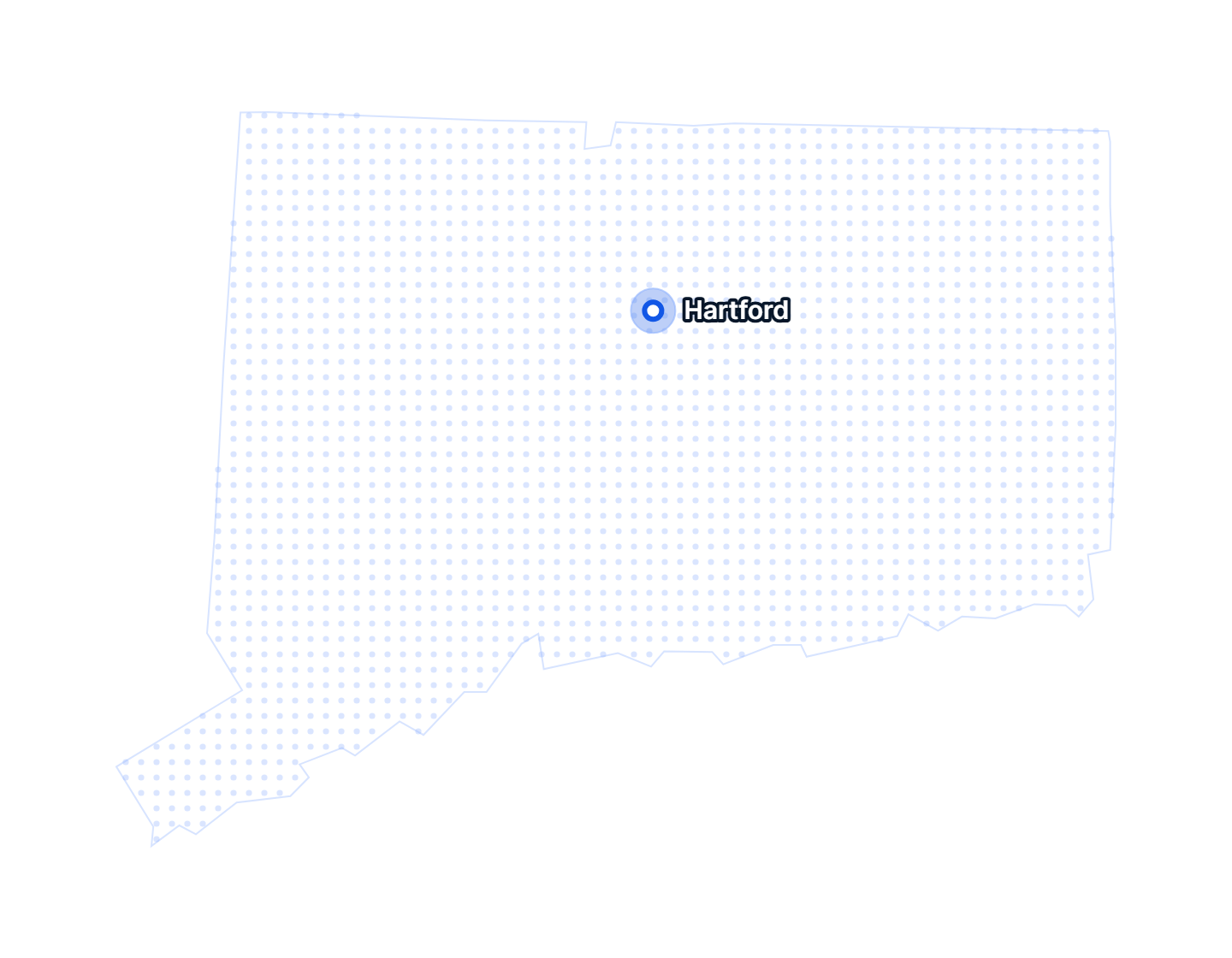
Hartford
Quick answer
Reviewed by the Fransion franchise research team · October 2026 · Sources listed below
Connecticut franchise law
The Department of Banking’s Securities and Business Investments Division administers the Business Opportunity Investment Act. Franchisors with a federally registered mark file an exclusion claim, which is not renewed each year unless something material changes.
1
0
14 days
01
A federally registered trademark or service mark is what makes the exemption available.
02
Send it to the Department of Banking before you offer franchises in Connecticut.
03
Deliver the FDD at least 14 calendar days before a candidate signs or pays.
| Before you sell | Connecticut | Registration state |
|---|---|---|
| State examiner reviews your FDD | No | Yes |
| Filing renews every year | No | Yes |
| FTC Franchise Rule applies | Yes | Yes |
| You may advertise before filing | No | No |
Sources
General information, not legal advice. Your franchise attorney confirms what applies to your offering.
For Connecticut founders
The state filing is the smallest step. Most of the work, and most of the cost, sits in the model, the FDD and the first year of franchise sales.
01
Unit economics, systems and a protectable brand. If one location does not make money on paper for an owner who pays royalties, it will not make money in Bridgeport or Waterbury either.
02
Fees, territories and support, then a franchise attorney prepares the FDD and franchise agreement.
03
With a federally registered mark, an exclusion claim to the Department of Banking. Without one, a business opportunity registration.
04
The system that makes your Connecticut results repeatable by someone who has never met you.
05
Built in-house by Fransion: the franchise sales site, candidate funnel and local marketing for the first units.
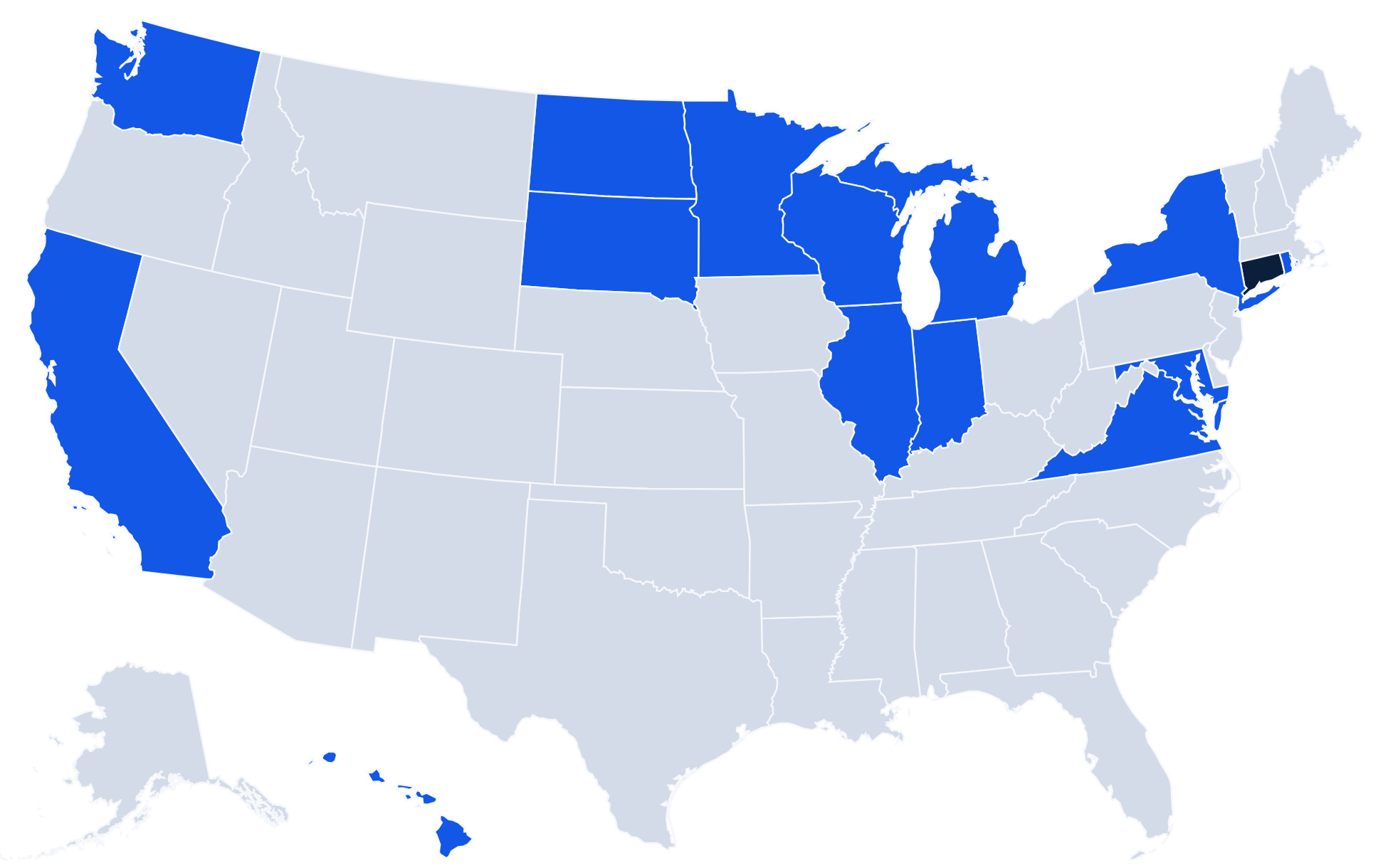
14 states require registration or a notice filing before you can offer franchises there. Plan them before you advertise nationally.
Markets
Connecticut is a high-income state anchored by insurance, finance, defense manufacturing and healthcare, with affluent suburbs along the New York commuter corridor.
We also serve brands in Bridgeport, New Haven, Stamford and Waterbury.

For franchise brands
A Hartford unit and a Bridgeport unit compete in different search results, for different customers. Each Connecticut location needs its own page on your franchise website, its own reviews and its own local campaigns, all under one brand.
Franchise website design →
One brand site with a location page for every Connecticut unit, and a franchise sales section for candidates.
Franchise SEO in Connecticut →
Local search for units in Hartford, Bridgeport and New Haven and beyond.
Franchise lead generation in Connecticut →
Recruiting franchisees across Connecticut within FTC and state advertising rules.
Reputation management →
Reviews and responses for each Connecticut location, under one brand standard.
FAQs
Still have a question? Ask a specialist, free and confidential.
Usually not. Connecticut’s Business Opportunity Investment Act does not apply when the offering is tied to a federally registered trademark. You file an exclusion claim with the Department of Banking instead. Without a federal mark, you register as a business opportunity.
The FTC Franchise Rule, not Connecticut, sets this. Item 21 of the FDD requires audited financial statements, with a phase-in that lets a new franchisor start with unaudited statements. Connecticut adds no separate financial review.
Yes, but 14 states, including California, Hawaii and Illinois, require registration or a notice filing before you offer franchises to their residents or for locations there. Plan those filings before you advertise nationally.
Leading Connecticut markets include Hartford, Bridgeport, New Haven, Stamford and Waterbury. The right order depends on your customer, your real estate costs and where qualified candidates live. Territory mapping answers the question with data for your concept.
Fransion works remotely with franchise brands nationwide, including Connecticut. Strategy, design and marketing are done by our own team. FDD preparation and filings are handled by franchise attorneys, and franchise development work is delivered with our partner FMS Franchise.
Free consultation
No cost and no obligation. A franchise specialist reviews your details and gets back to you.
01
Share a few details
Tell us about your business and what you want to achieve.
02
Speak with a specialist
A call with a franchise specialist about your goals.
03
Get a clear recommendation
An honest view of where you stand and the right next steps.
Prefer email? hello@fransion.com
